How I Learned More About the Civil War.

In school, I loved reading about history and social studies. I grew up in California, so much of what I read about the Civil War made me think that this was a conflict far away from reality. I didn’t understand the significance of the events and the eventual outcome. I’ve lived in the South for many years now, and I have a vastly different view of the events that many people here still refer to as the “War of Northern Aggression.”

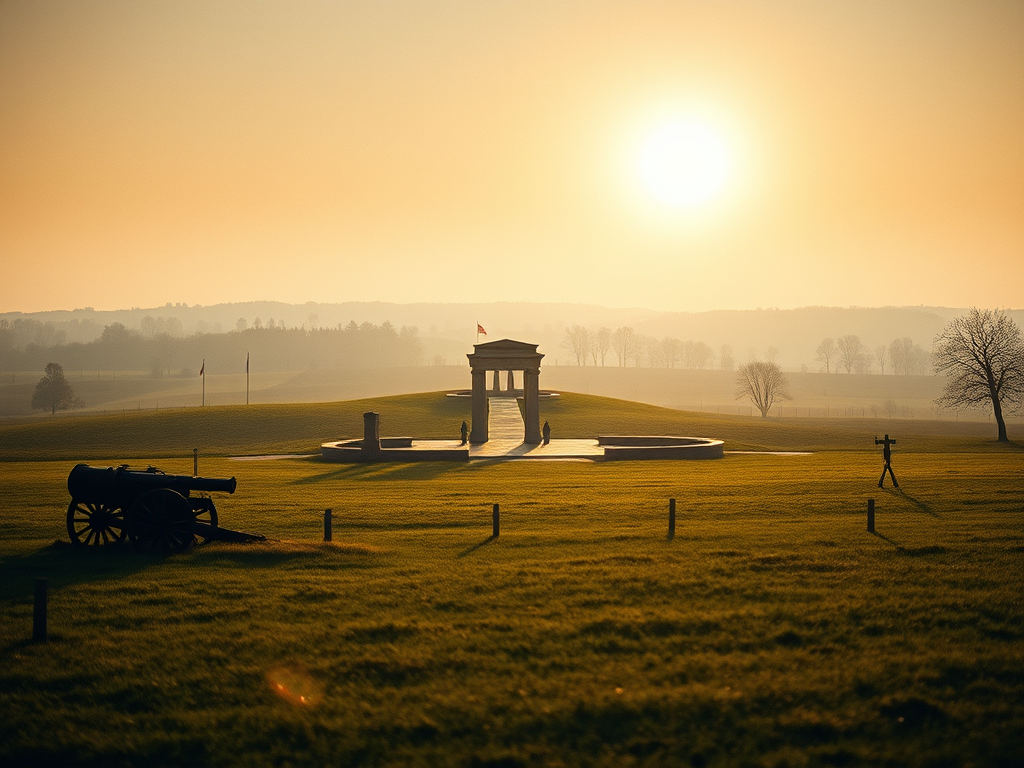
I’ve visited several battlefields like Gettysburg, Appomattox, Chickamauga, Manassas, and others. Each visit to these locations brings the Civil War to life for me. Suddenly, it isn’t represented by a page in a school history book, but rather where tens of thousands of people just like me died for a cause they really believed in. I stood on the very land they all fought for.

Living in the State of Tennessee as I do, I have learned some fascinating facts about what happened here during the Civil War. While Tennessee was the last state to secede from the Union to become a part of the Confederacy, it was also the first Confederate State to be readmitted to the Union in 1866. Before Tennessee’s secession from the Union, people in Scott County (about 60 miles from where I live) voted to secede from the State of Tennessee. They formed the “Free and Independent State of Scott,” which lasted until the end of the conflict. Now that took guts, and I didn’t even know it happened.

Nursing Homes are terribly lonely places.

Hey, Pocahontas’ real name was Matoaka. Who knew?

I’m reading ‘1491’ by Charles Mann, about North America before Columbus, when the area was called ‘Dawnland.’ It reveals the valuable contributions of Native tribes and the cruelty they faced from settlers, including land theft and disease. This book offers fresh insights into history I’ve misunderstood book.


Well, I certainly didn’t know that. I’m in the process of reading a book titled “1491” written by Charles Man. This book focuses on life in North America, specifically on the area that came to be known as the United States. This book is crammed with facts that I wasn’t aware of. First of all, long before Columbus landed (in the Bahamas, by the way), the area was known as “Dawnland.” What a great name.

This book is fascinating; it offers a view of what happened here, who did what, and most importantly, the enormous value that tribes of Indians brought to the settlers. As history reports, we weren’t very kind to these folks, doing everything possible to take their land, agriculture, and birthright. We gave them deadly diseases in return for their initial hospitality and assistance. It certainly seems that many of the history books I read as a child weren’t exactly on target. This book opens new and exciting insights into what happened and when. I’m sure glad I found this book.

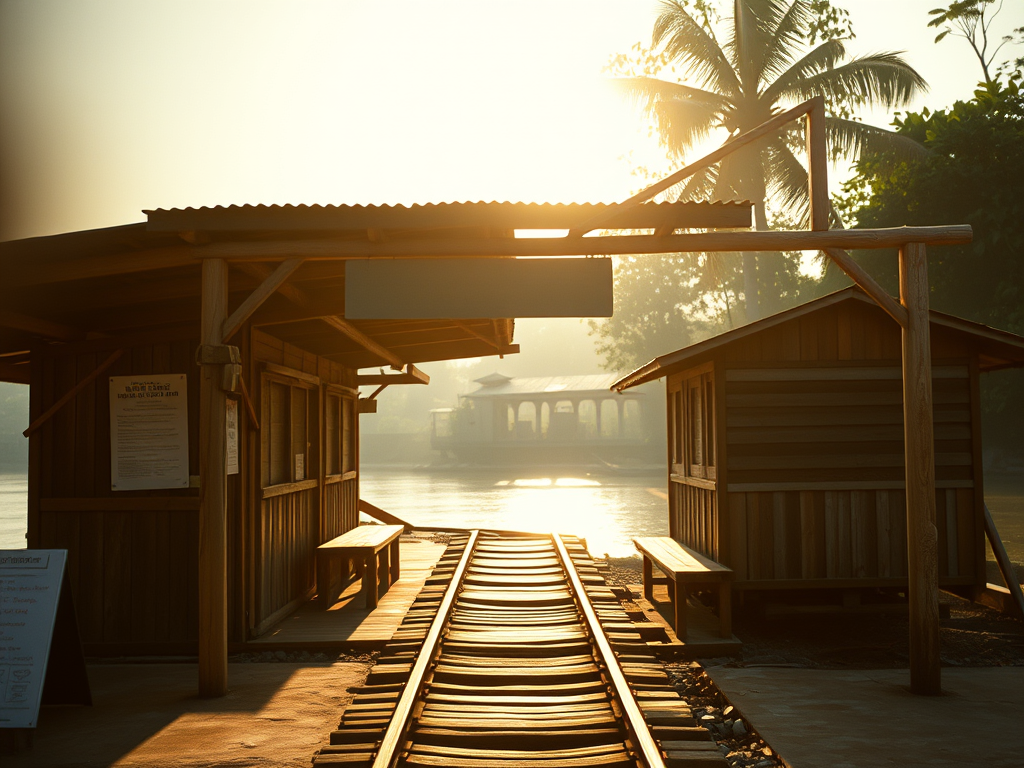
Let’s take the 8AM train to Laos today?

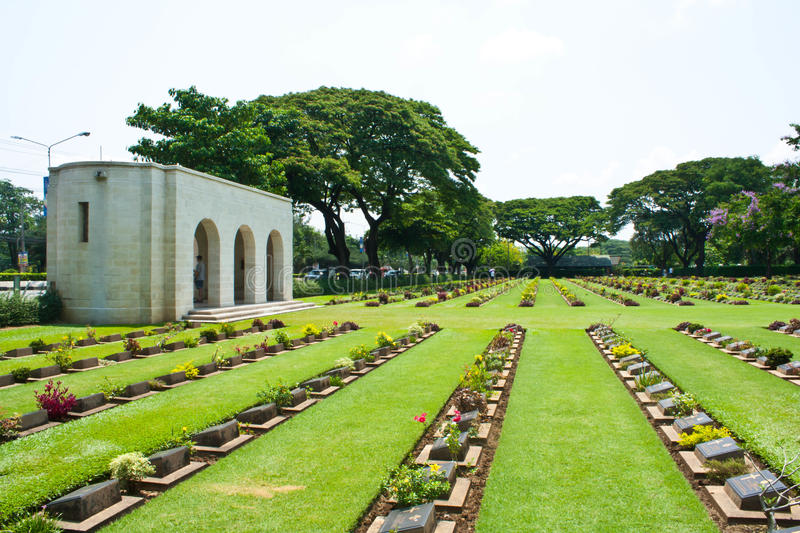
Hey, do you want to see the Bridge on the River Kwai?

River Kwai

Is George the luckiest boy in the world?

Prince George celebrated his 12th birthday today, July 22nd. Since his father, the Prince of Wales, will eventually assume the role of King, George will be elevated to super-stardom as the next eventual King. For decades, people in the United Kingdom have debated the value of their Royal families; for now, this is one young man (and his sister and brother) who doesn’t have a care in the world. Happy birthday, George.

Today I was thinking of memories of 911.

When the tragedy happened, people were stunned. For those who worked there or had friends, it was unimaginable. Although I didn’t live in New York at the time, for a moment, we were all New Yorkers. As the years passed and the museum and new development progressed, I often thought of visiting, but didn’t want to, perhaps because my memories of the buildings were too strong, making it hard to believe they no longer existed. 

For a couple of months, I worked temporarily in one of the towers. Coming and going was a mad rush of people going in and out. Our offices were on the 90-something floor. Going up was unusual; we could hear the whooshing of air as the elevator flew up to our floor.

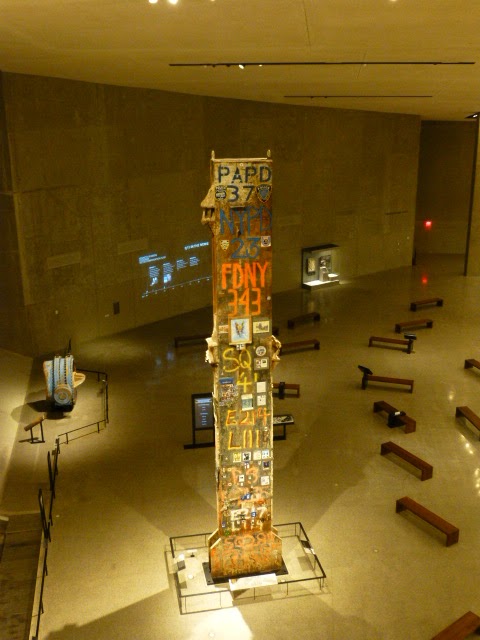
After putting it off for years, on a visit to New York City around my birthday, I did head to the museum for a long-overdue tour. It was time. As I visited the museum, the buildings’ memories, the vibrancy of the activity in and around them, and the subsequent devastating loss of life were overwhelming. There are so many memories – and they all came flooding back the second I walked into the exhibits. The young and newly married husband of my daughter’s high school friend was memorialized there forever. She was 3 months pregnant with their daughter when he died, and while their lives have gone on without him, his name is carved in stone as a constant reminder of horrific and unnecessary loss.

There are artifacts, remembrances, photos, voices, clippings, steel pieces, and concrete at every turn in the museum. In the background, through the silence, everyone hears the song “Amazing Grace” played softly and so well by a bagpipe musician. It isn’t a museum of paintings and sculptures created hundreds of years ago — it’s a living, breathing, and powerful reminder of people, places, and an event that was (and is) unimaginable to everyone. Please don’t miss this experience. It will remain in your thoughts forever.

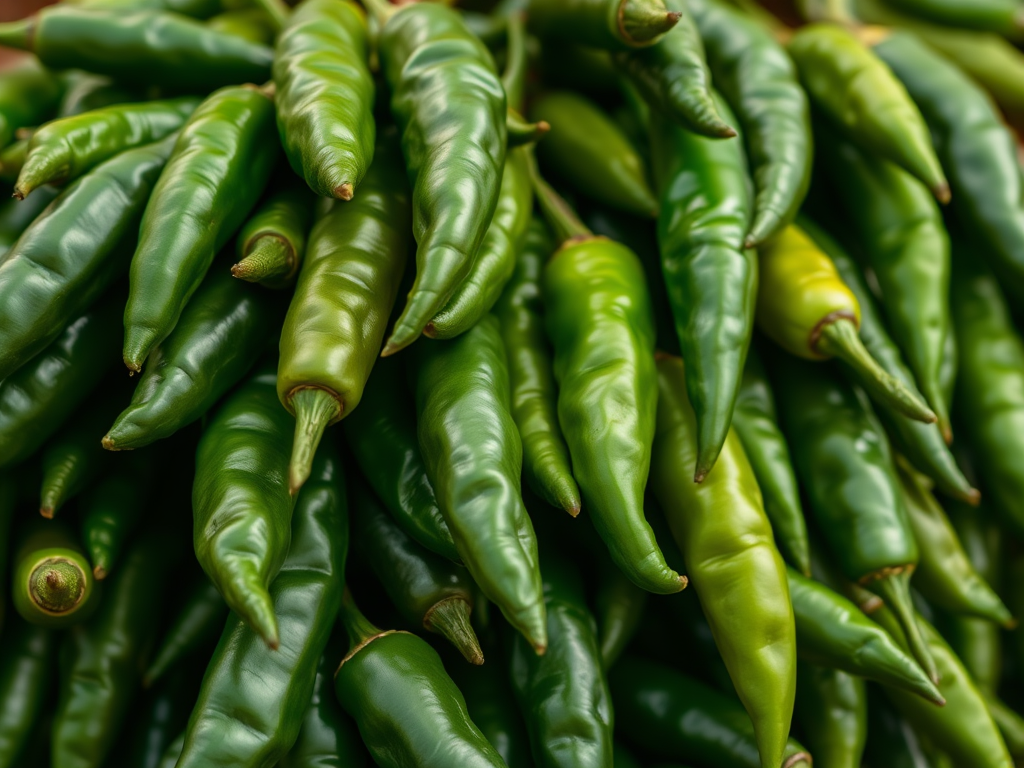
Hatch chilies just arrived in Tennessee!

Hatch chilies from New Mexico are a big deal with foodies everywhere. They are only grown in New Mexico, and the harvest season is pretty short. I was amazed when I walked into my local supermarket here in East Tennessee and immediately saw a large display of fresh Hatch chilies. It’s fair to say that most people in our neighborhood aren’t aware of what a prize these chilies are.

There they are, waiting for me to begin the roasting process; with a bit of work, roasting turns them into delicious, mild peppers that are wonderful. Roasting them at home isn’t as fun as watching how they are roasted in the Southwest. In Tucson, people waited all year for the supermarkets to receive Hatch chilies. In the store’s parking lot, they’d roll out a giant metal contraption; it’d a huge metal drum on top and a ferocious propane-fired flame source at the bottom of the frame.

All day, they’d shovel chili into the drum, lighting the burner and turning the drum. Pretty soon, they would have a big pile of fresh, roasted chilies, ready to take home and peel for later use. It was community involvement at its best. Here in Tennessee, I often go for the more straightforward route by using a convection oven. Hopefully, I’ll succeed in creating some truly fantastic cooking condiments. If things turn out well, I might even pick up a couple more bags before they sell out.

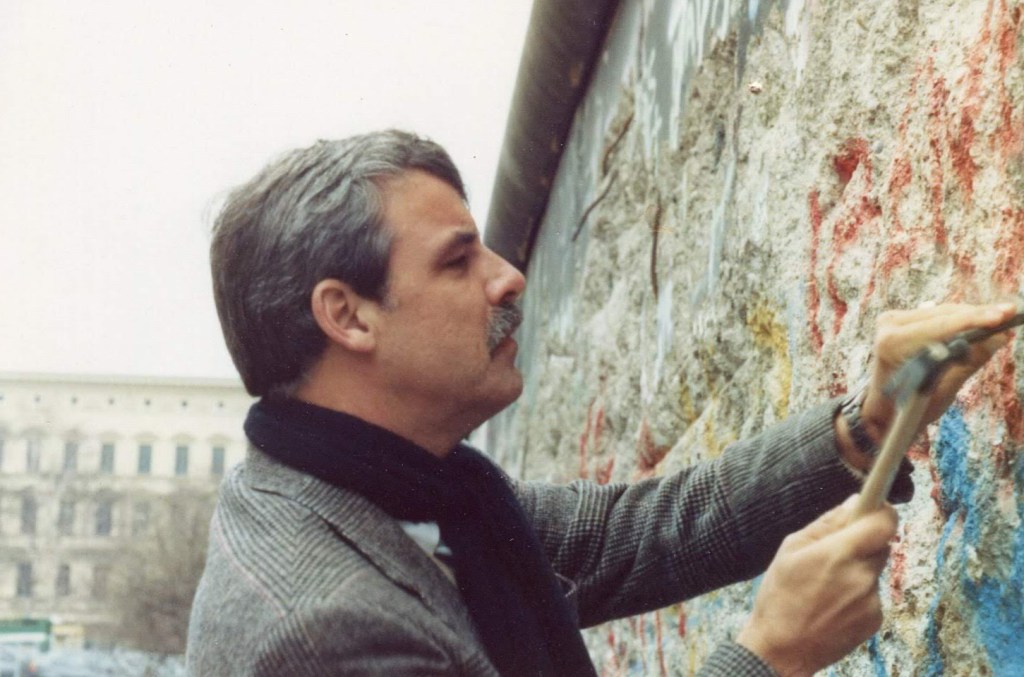
When the Berlin Wall came down, I was there with my hammer.

I recently read an interesting article about the many lifestyle changes happening in Germany. Just like in other countries, including the USA, it seems that many people, especially new college graduates, are not focusing much on the events that shaped their country’s history. I’d like to share an event that occurred during a time of significant cosmic change.

For many years I’ve attended a travel conference in Berlin, and on one memorable occasion, it was held around the time the Berlin Wall was coming down. I knew I wanted to see the wall again, especially as it was actually being taken down, so when I planned my trip to Berlin, I included a small hammer and chisel in my bag.

Sure enough, one day, a friend and I went to the Wall to see what’s up. Everywhere we looked, people were trying to knock out a piece of the wall. People were renting ladders and hammers from forward-thinking entrepreneurs, but I was ahead of the game. I brought my stuff with me. I asked one of the people there if I could borrow his ladder for a short time. He agreed, and I began hammering into the wall and chiseling pieces off. Let me say right now that was one hard wall. It was solid concrete, reinforced to an extreme degree. This was Class A, East German concrete.

I was teetering on the ladder right above where my friend took this photo. I was pounding the wall, and small pieces began to fall off. I managed to hack off several pretty good-sized pieces with minimal damage to my knuckles. I brought the pieces (and my equipment) back to San Francisco. As luck would have it, one of my daughters was studying the fall of the Wall in school. I gave her a handful of brightly colored concrete to take to school for show-and-tell. To put it simply, she earned an “’Aon that project. I still have several pieces of the wall on my desk. I hope that this is the only Wall that restricted anyone’s movement anywhere in the world.

Adieu, mon ami Charles